

Last Updated: October 26, 2026
Quick Summary
Schedule a school assembly by starting three to four months out: define your learning goals, gather two or three date windows, and confirm gym availability before contacting a presenter. Lock the date and sign the agreement six to eight weeks ahead, then reconfirm setup times and visitor procedures one week before the visit.
- Build your tour itinerary around each campus’s bell schedule, testing windows, and early-release days first.
- Cap bookings at two or three schools per day and budget 30 minutes of buffer per campus transition.
- A typical assembly runs about 40 minutes, or two back-to-back 30-minute sessions split by grade band.
- Confirm the setup window in writing a week ahead and name the staff member meeting the presenter.
- Hold one make-up date per tour window and agree in writing on how cancellations are communicated.
Table of Contents
- The Big Picture: Why Smart School Assembly Planning Starts Early
- Your School Assembly Planning Checklist for a Smooth Booking
- Define Your Purpose and Learning Goals
- Identify Your Team and Decision-Makers
- Building a School Assembly Tour Itinerary That Works
- The School Assembly Scheduling Template: A Step-by-Step Timeline
- Nailing the Details: School Assembly Duration and Logistics
- Secure Your School Assembly Dates: Next Steps for Your Team
- Frequently Asked Questions
The Big Picture: Why Smart School Assembly Planning Starts Early
Scheduling a school assembly tour rewards the planner who starts early. The strongest programs are locked in months ahead, not weeks, because calendars fill and travel routes harden fast.
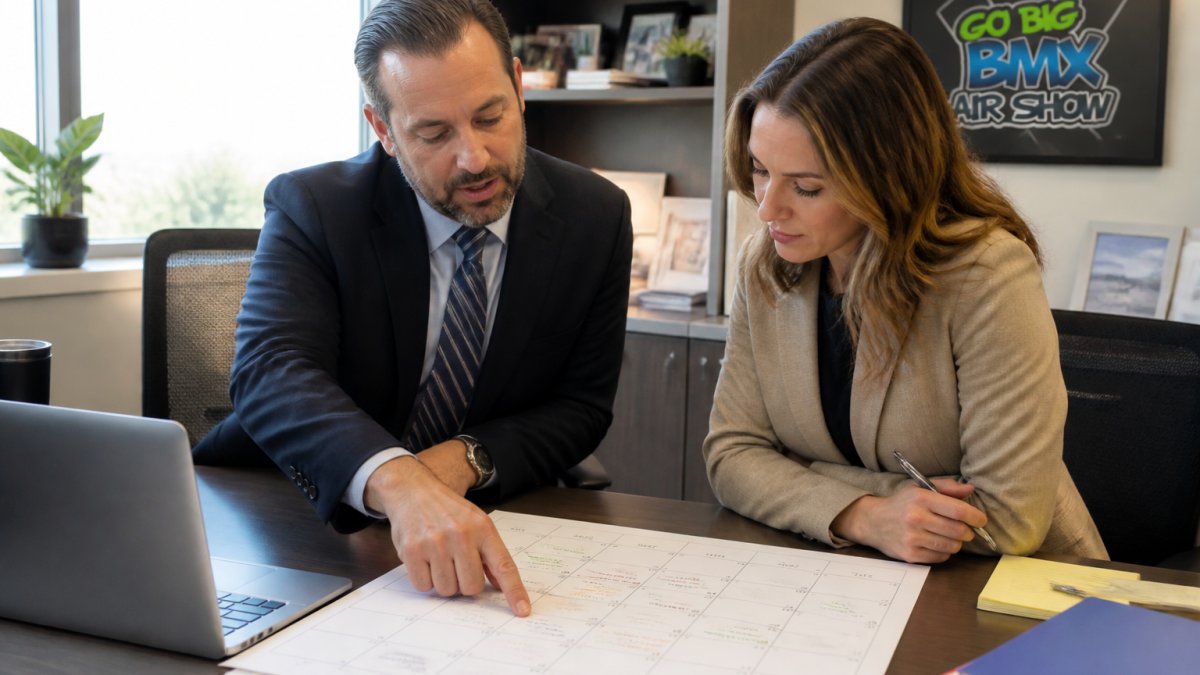
Early planning pays off in three ways:
- Better date options before the popular slots disappear
- Time to align the assembly with curriculum and character education goals
- Room to coordinate multiple schools on one route
Your School Assembly Planning Checklist for a Smooth Booking
A school assembly planning checklist keeps the process moving. Work through each item before contacting any presenter.
- Confirm the learning goals the assembly should support
- Identify who approves the booking and who signs the contract
- Gather two or three target date windows
- Check the gym or auditorium availability
- Confirm grade levels and total audience size
- Review the presenter’s program options and format
Once those items are settled, the booking conversation gets shorter and sharper. A direct BMX show booking form lets a coordinator submit those details in one pass.
Define Your Purpose and Learning Goals
Purpose comes first and shapes every later decision. An assembly tied to a clear goal, such as anti-bullying, respect, or student motivation, earns staff buy-in faster than a general “fun day” booking.
Ask three questions:
- What behavior or message should students walk away with?
- Which grade levels need this most?
- How will teachers reinforce the message afterward?
Programs that pair live demonstration with a character lesson tend to hold attention longer. Reviewing the available educational school assemblies early helps a team match the format to the goal.
Identify Your Team and Decision-Makers
Booking decisions move faster when the right people are named up front. Most schools involve a principal, an assistant principal, a activities coordinator, and sometimes a PTA representative.
Map the roles before the first call:
- Approver: signs off on the date and the program
- Coordinator: handles logistics and communication
- Host: manages students on the day
A common mistake is routing the whole conversation through someone without approval authority. Name the decision-maker early and the back-and-forth shrinks.
Building a School Assembly Tour Itinerary That Works
A school assembly tour itinerary moves a presenter through multiple schools in a set window. Districts often book several campuses on consecutive days to share travel and reduce disruption.
Start With the Calendar, Not the Map
Build the itinerary around these anchors, in this order:
- School calendar first. Pull each campus’s bell schedule, early-release days, testing windows, and assessment dates. A tour that lands on a testing day or a half-day gets cancelled or rushed.
- Start and end times per school. Most assemblies fit a 40-minute block, but the real constraint is the transition: moving students in, seating them, and dismissing them without eating into the next period.
- Travel time between campuses. Add realistic drive time plus a loading and unloading margin. Budget 30 minutes of buffer per campus transition, not the raw drive time alone.
Routing Rules That Save the Day
Group nearby schools on the same day and sequence them so the presenter moves in one direction rather than zig-zagging across the district. Rules experienced tour coordinators follow:
- Cluster by geography, not by grade level. Two elementary schools three miles apart beat two elementary schools across the district on the same day.
- Front-load the farthest school. Start the day at the campus with the longest drive and work back toward the presenter’s base, so the end of the day is not a long haul.
- Cap it at two or three schools per day. Back-to-back bookings beyond that invite late starts and exhausted performers, and the last school gets a lesser show.
- Build in one flex day per week. Weather, a fire drill, or a schedule change at one campus can cascade through the whole route. A flex day absorbs the shock.
- Share the route with every host school. When each principal can see the full day, they understand why their slot is fixed and are less likely to request a last-minute swap.
Coordinating Across Differing School Cultures
Every campus runs on its own rhythm. Some principals want a pre-assembly staff huddle; others want the presenter in and out with minimal disruption. Ask each host three questions before locking the route:
- What is your arrival and check-in procedure for outside visitors?
- Who meets the presenter at the door, and who handles the microphone and sound?
- What is your dismissal plan if the assembly runs long?
For grade-specific planning, how to plan engaging school assemblies for middle schoolers offers a deeper look at matching content to age group, which matters when a single tour visits both elementary and middle school campuses.
Build the route in a shared spreadsheet with one row per school and columns for arrival, setup window, show start, show end, and departure. Share it read-only with every host so everyone sees the same plan.
A Sample Two-Day Route Shape
A workable pattern for a district tour: Day one covers the two farthest campuses with a mid-morning and an early-afternoon slot, separated by a 45-minute travel and setup buffer. Day two covers the two nearest campuses the same way, leaving the late afternoon open for travel home or a weather make-up.
A school assembly tour itinerary only works when the calendar, the map, and the buffer discipline are planned together. Route first, confirm dates, then share the plan with every host.
The School Assembly Scheduling Template: A Step-by-Step Timeline
A school assembly scheduling template turns a vague idea into a dated plan. The timeline below works for a single school or a multi-school tour.
| Stage | Timing | Key Action |
|---|---|---|
| Goal setting | 3-4 months out | Define purpose and audience |
| Date shortlist | 3 months out | Gather two or three date windows |
| Inquiry | 2-3 months out | Contact presenter with details |
| Confirmation | 6-8 weeks out | Lock date and sign agreement |
| Logistics check | 2-4 weeks out | Confirm space, times, and setup |
| Final check-in | 1 week out | Reconfirm arrival and schedule |
From Inquiry to Confirmation: The Communication Flow
The inquiry-to-confirmation flow has four steps: send the inquiry with goals, dates, and audience size; review the proposal and available dates; confirm the date and complete the agreement; then check in on logistics closer to the visit.
Clear communication at each step prevents surprises. Questions about setup, space, or scheduling are best raised early. The GO BIG BMX AIR Show team is reachable through contact options for exactly those questions.
Nailing the Details: School Assembly Duration and Logistics
School assembly duration shapes the whole day. A typical program runs about 40 minutes, long enough to hold attention without cutting into class time. But duration is only one line in the logistics plan.
Duration and Format by Audience
Match the block to the audience. A common pattern is a single 40-minute all-school assembly, or two back-to-back 30-minute sessions split by grade band so younger students are not asked to sit longer than their attention span allows. Confirm the format early, because a split session changes the setup and teardown math for the whole day.
Logistics to confirm in writing:
- Arrival time and setup window
- Gym or auditorium access, including who unlocks the door
- Sound and space requirements, and whether the school supplies a microphone and PA
An unconfirmed setup window is the most common cause of a late start. Confirm access times in writing a week ahead, and name the staff member who will meet the presenter at the door.
Visitor Procedures and Safeguarding
Every campus has a visitor check-in process, and the presenter should know it before arrival. Confirm these with the front office:
- Sign-in and badge. The presenter checks in at the main office and wears a visitor badge for the duration of the visit.
- Supervision. A staff member stays in the room for the entire assembly. This is standard practice and protects both students and the presenter.
- Photo and media permissions. Ask whether the school permits photos or video, and confirm which students are on a no-photo list before any camera comes out.
These steps are not red tape. They are the reason a principal can approve the booking with confidence.
Accessibility and Inclusion
Plan for students who need accommodations before the day arrives. Confirm with the special education team and school nurse:
- Seating for students who use wheelchairs or need aisle access
- A sign language interpreter if the school provides one, and where that person should stand
- Volume and sensory considerations for students sensitive to loud sound
A presenter who asks these questions in advance signals respect for the school’s inclusion practices and removes a common reason assemblies get scaled back.
Contingency Planning
Build a backup plan into the booking itself. Ask the presenter what happens if a school cancels on short notice, if weather closes the building, or if a fire drill interrupts the schedule. A common pattern is to hold one make-up date per tour window and agree in writing on how a cancellation is communicated.
A Pre-Visit Confirmation Checklist
One week out, send a short confirmation to the presenter and copy the front office. Include arrival time, check-in location, the staff host’s name, the setup window, the sound plan, the photo policy, and the dismissal plan. One email closes the loop.
The details that matter most are the ones nobody notices when they go right: a confirmed setup window, a visitor badge, a supervised room, an accessible seat, and a backup date. Plan those, and the assembly itself takes care of the rest.
Secure Your School Assembly Dates: Next Steps for Your Team
Locking dates early is the single best move a coordinator can make. Popular slots fill, and a flexible window beats a single rigid date every time.
The benefits go beyond the day itself. A strong program supports anti-bullying efforts, builds school community, and gives students a memorable shared experience. Reviewing the top benefits of hosting a BMX school assembly helps a team build the case for approval.
Frequently Asked Questions
How far in advance should we schedule a school assembly?
For the best selection of dates and times, start the conversation three to six months before your desired window. Popular months like October (anti-bullying campaigns) and May (end-of-year celebrations) fill up fast. If your school assembly planning is on a tighter timeline, still reach out; touring performers often have last-minute openings or can suggest a nearby date on their route.
How do you coordinate a school assembly tour across multiple schools?
Designate one group coordinator, like a district official or PTA leader, to be the central point of contact. This person gathers preferred dates and time slots from each school, then presents a single block of availability to the presenter. A shared school assembly scheduling template helps track confirmations and avoids double-booking. This coordinated approach is also how districts secure discounted piggyback rates for multi-school tours.
What is a typical school assembly duration, and how does that affect scheduling?
Most assemblies run 45 to 60 minutes, including setup and Q&A. When scheduling, plan for a 90-minute window to account for arrival, equipment setup, and student dismissal. Be sure to check your school’s bell schedule and avoid overlapping with lunch or standardized testing. A clear school assembly tour itinerary shared with teachers ahead of time prevents confusion and keeps the day on track.
What should be on our school assembly planning checklist before we contact a presenter?
Before you call or email, have these items ready: your preferred date options, an estimated number of students per session, the performance space (gym, auditorium, outdoor area), your learning goals for the assembly, and a budget range. Also confirm your principal’s approval and identify any technical or accessibility needs. Having this information ready makes the booking process faster and ensures the school assembly duration and content fit your schedule.
The challenge is simple: calendars fill fast, and the best dates go first. GO BIG BMX AIR Show brings 29 years of experience and more than 10,000 shows to schools nationwide, pairing live pro BMX stunts with anti-bullying and motivation messages. With flexible booking options and discounted piggyback rates for multi-school tours, planning a tour is easier than it looks. Get started with GO BIG BMX AIR Show and secure the dates that fit your school calendar.
