
Last Updated: November 1, 2026
Quick Summary
A budget friendly school assembly is a whole-school event planned around existing staff, student talent, and donated time, with any paid booking weighed against cost per student. In 2026, pick a theme tied to a school goal, cluster dates into one monthly window, and reuse the same setup and run-of-show to keep costs near zero.
- Character education themes typically cost $0-$150, mostly for printing pledge cards and a banner.
- STEM demo themes run $0-$400, with consumables like baking soda and dry ice as the main expense.
- Lock the theme, host, and date six weeks out, then rehearse the full program one week before.
- Keep a labeled standing supply bin so the school never buys the same materials twice.
- Compare any paid program against cost per student rather than the sticker price.
Table of Contents
- Why Budget Friendly School Assemblies Matter More Than Ever in 2026
- School Assembly Themes for 2026 That Cost Little but Deliver Big
- Student-Led School Assembly Ideas That Build Ownership and Save Money
- A School Assembly Schedule Template for Tight Budgets and Tight Calendars
- Your School Assembly Planning Checklist: From Concept to Curtain Call
- When to Bring in a Professional Assembly and How to Make It Affordable
- Frequently Asked Questions
Why Budget Friendly School Assemblies Matter More Than Ever in 2026
Principals and activity coordinators are assembling next year’s calendar with less discretionary money and higher expectations. Budget friendly school assembly ideas in 2026 start with a hard look at what a school can realistically spend, then build outward from there.
A budget friendly school assembly is a whole-school event planned around existing staff, student talent, and donated time, with any paid booking weighed against cost per student. The goal is not the cheapest show.
The Real Cost of Disengagement
An assembly that misses its audience costs more than the invoice. It costs a class period, a gym reset, and the credibility a host needs for the next event.
- Students who tune out learn that gatherings are skippable
- Staff lose a planning block they cannot recover
- Principals lose use when the next proposal arrives
The fix is planning discipline, not a bigger check.
School Assembly Themes for 2026 That Cost Little but Deliver Big
Strong themes repeat well and scale down to a single gym. If you need a ready list of elementary-friendly assembly ideas to adapt for your own school, start there. The four below need one host, one microphone, and a stage plan. Each is paired with a realistic cost band so principals can slot it into a building budget without guesswork.
Character Education and Anti-Bullying Themes
Character education works when students see the behavior modeled, not recited. For deeper, practical character-development assembly ideas that fit a tight budget, start with a short student skit paired with a clear pledge and a follow-up classroom prompt.
Typical cost band: $0-$150. Most of that is printing for pledge cards and a banner; the labor is counselor and student time. Schools that already run a peer-leadership program often spend nothing beyond paper.
STEM, History, and Talent Show Themes
Science demonstrations, robotics demos, and living-history presentations all run on student labor. A talent show doubles as a fundraiser kickoff. Music and history performances fit a pep rally slot without outside cost.
Typical cost band: $0-$400. Science demos may need consumables (baking soda, vinegar, balloons, dry ice from a local grocer). Robotics demos use equipment the club already owns. History performances are nearly free if costumes come from the drama closet.
| Theme | Who Leads | Prep Time | Typical Cost Band | Biggest Hidden Cost |
|---|---|---|---|---|
| Character education | Counselors and student leaders | 2 weeks | $0-$150 | Printing and pledge materials |
| STEM demos | Science teachers and clubs | 3 weeks | $0-$400 | Consumable supplies |
| History performance | Social studies department | 3 weeks | $0-$200 | Costumes and props |
| Talent show | Student council | 4 weeks | $0-$250 (can net positive) | Sound and lighting rental if the gym system is weak |
Before approving any theme, ask the lead teacher one question: “What does this cost if we do it with what we already own?” Most themes drop to near zero once that question is answered honestly.
How to Pick the Right Theme for Your Building
Match the theme to a goal the school already has on its improvement plan. If hallway behavior is the concern, character education earns its slot. If science scores are flat, a STEM demo night doubles as family engagement. If school spirit is low after winter break, a talent show or pep rally resets the tone. The theme should answer a problem the principal can name in one sentence, that is the test for whether it belongs on the calendar.
Student-Led School Assembly Ideas That Build Ownership and Save Money
Ownership is the cheapest engagement tool a school has. When students run the program, audience attention rises and adult labor falls.
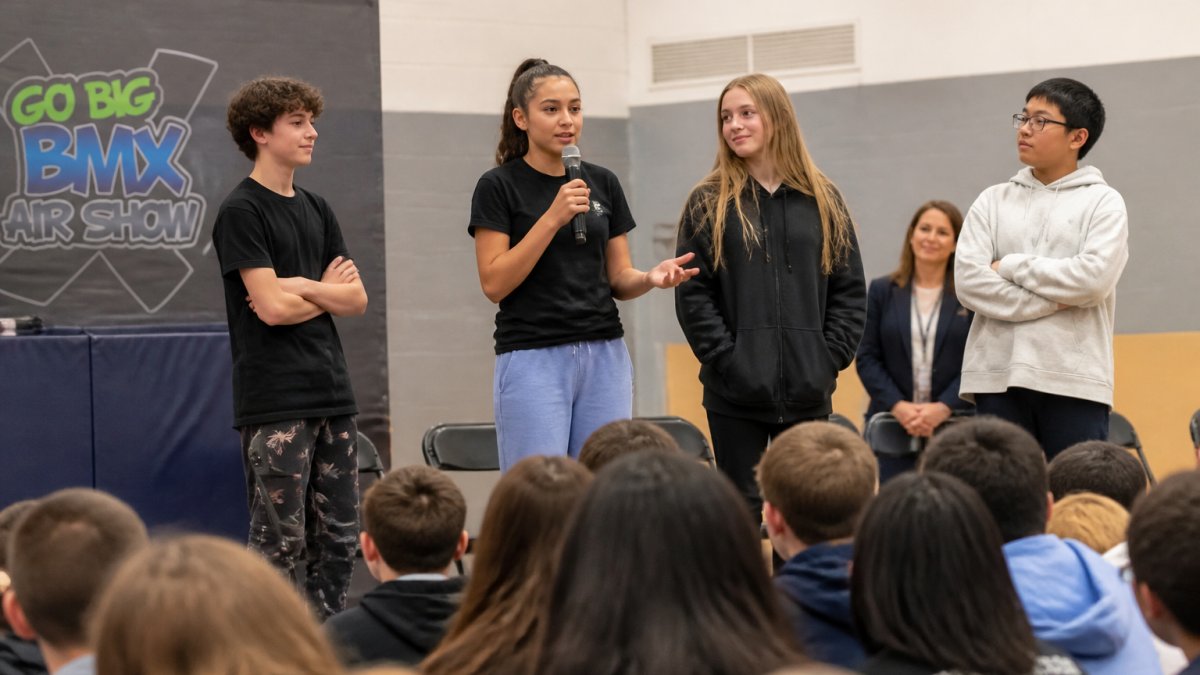
Empowering students to organize their own events fosters a sense of community that extends beyond the gymnasium, encouraging schools to explore local indoor school venues for off-campus learning opportunities.
A workable format: a student host opens, two grade-level acts perform, a peer speaker delivers the message, and a student closes with a challenge. Rotate hosts each month so more students get a turn. For age-appropriate planning guidance for middle schoolers taking ownership of assemblies, review the format before you assign roles.
- Student MC pairs
- Class-versus-class trivia
- Hobby showcases and talent show heats
A School Assembly Schedule Template for Tight Budgets and Tight Calendars
Timing decides cost as much as content does. Cluster assemblies into one monthly window, reuse the same setup, and publish the schedule a term ahead. For scheduling tips for professional visits that fit a tight calendar, review the guidance before booking outside performers. The template below is built for a building that has one gym, one sound system, and a staff that cannot lose instructional minutes.
| Slot | Timing | Purpose | Owner |
|---|---|---|---|
| Planning lock | 6 weeks out | Confirm theme, host, and date | Assistant principal |
| Materials list finalized | 5 weeks out | Order or pull supplies; confirm what is already owned | Lead teacher |
| Staffing plan posted | 4 weeks out | Assign supervision, sound, and setup roles | Activities coordinator |
| Rehearsal | 1 week out | Run the full program once, time it, fix transitions | Student MC and host |
| Assembly day | 30-40 minutes | Deliver and reset | All assigned staff |
| Follow-up | Next class day | Reinforce the message with a 10-minute lesson | Classroom teachers |
The Staffing Plan That Keeps Costs at Zero
Most low-cost assemblies fail not on content but on unassigned labor. Name one person for each of these roles before the event is approved: a stage manager, a sound operator, a student-wrangler for each grade band, a setup crew, and a reset crew. Reuse the same people every month so the routine becomes muscle memory and the planning time drops with each cycle.
The Materials List
Keep a standing bin for assembly supplies so nothing is bought twice. A workable baseline: a wired microphone and a backup, a Bluetooth speaker for backup audio, extension cords, gaffer tape, printed run-of-show sheets, pledge cards or program handouts, and a labeled box for props. Label the bin and store it in the same closet every time, the single biggest cost saver is not re-buying what the school already owns.
Three Cost-Control Levers
- Cluster the calendar. Two assemblies in one week share setup, sound check, and staff time. Spreading them across the month doubles the labor.
- Reuse the run-of-show. A 30-minute format that works in September works in March with new content. Do not redesign the format each time.
- Publish a term ahead. Teachers plan around known dates, substitutes are cheaper to arrange, and outside performers can be booked into existing windows rather than creating new ones.
Do not schedule an assembly in the two weeks before state testing or the week of a major athletic event. Attendance and attention both drop, and the assembly reads as filler rather than instruction.
Your School Assembly Planning Checklist: From Concept to Curtain Call
A written checklist keeps a low-cost assembly from turning into a scramble. Assign one owner per line and confirm each item a week before the event.
- Theme chosen and tied to a school goal
- Host and student MCs named
- Stage, sound, and seating plan approved
Budget and Resource Allocation
Split the plan into three buckets: staff time, donated materials, and any paid booking. Most school-wide events can run on staff time alone. When a paid program enters the plan, compare total cost against cost per student, not against the sticker price.
Accessibility and Inclusive Participation
Every student should be able to take part. Reserve front-row seating for students with mobility needs. Provide a sign language interpreter when requested. Offer a quiet alternative for students who find large crowds difficult. Caption any video content.
When to Bring in a Professional Assembly and How to Make It Affordable
Some messages land harder from an outside voice.
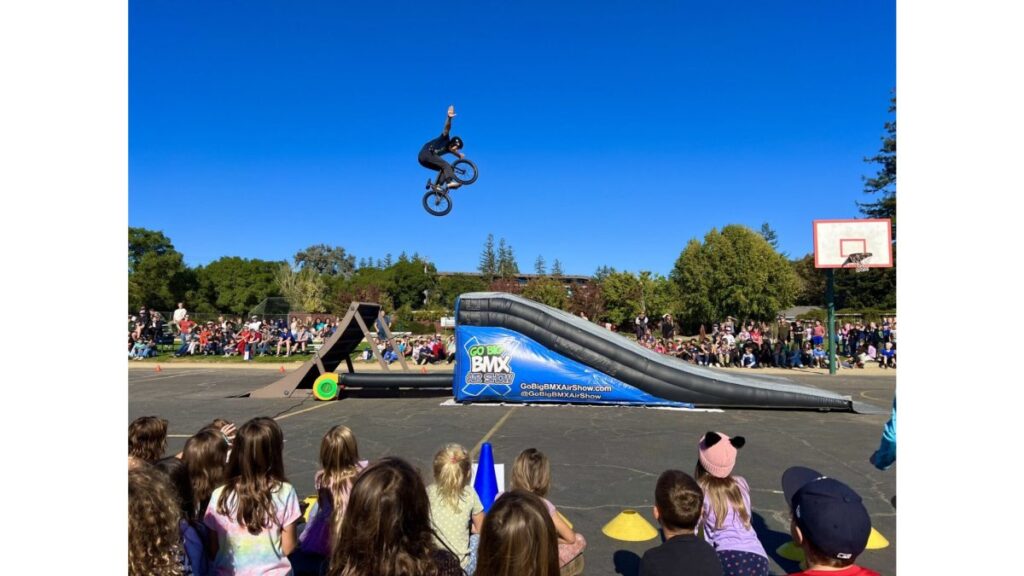
GO BIG BMX AIR Show has delivered live pro sports demos combined with educational messaging for over 29 years and more than 10,000 shows.
Michael Campanile, a physical education teacher at Centerville Elementary School, put it plainly after a visit: “You guys absolutely crushed it.
Ready to act? Request your dates and rates list from GO BIG BMX AIR Show and lock in dates before the spring calendar fills.
Frequently Asked Questions
What are some creative topics for a school assembly?
Creative topics can include student-led talent shows, STEM demonstrations with robots or science experiments, anti-bullying skits written by students, historical reenactments, and pep rallies that double as fundraiser kickoffs. You can also theme assemblies around seasonal events or school-wide reading challenges. The key is to involve students in planning so the content feels relevant and engaging, and to vary formats throughout the year to keep energy high.
How can a school plan an engaging assembly with limited resources?
Start by using student talent and staff expertise instead of paid performers. Create a school assembly planning checklist that covers goals, budget, schedule, and roles. Use a school assembly schedule template to map out the year and avoid conflicts. Leverage free resources like library media, parent volunteers, and local community members. For professional programs, ask about discounted piggyback rates when multiple schools book together, which can lower costs significantly.
How long should a school assembly last?
For elementary students, 30 to 45 minutes works best; middle and high school assemblies can run 45 to 60 minutes. Keep segments short and interactive to maintain attention. If you include a performance or demonstration, build in time for questions. Always factor in transition time for students entering and exiting the gym. A tight, well-paced schedule respects everyone’s time and keeps the event memorable.
How can students help organize a school assembly?
Form a student assembly committee that handles scripting, stage setup, tech support, and promotion. Assign roles like emcee, backstage manager, and social media coordinator. Students can also propose themes, design posters, and run rehearsals. This builds leadership skills and reduces staff workload. Make sure to provide clear guidelines and a timeline so students know what is expected and when.
The hardest part of a tight budget year is proving an assembly was worth the time. GO BIG BMX AIR Show combines 29 years of nationwide school visits with live pro sports demonstrations and character messaging students remember. Flexible booking and discounted piggyback rates help districts stretch one visit across several campuses. Get started with GO BIG BMX AIR Show and request the dates and rates list for your school.
