
Last Updated: November 8, 2026
Quick Summary
Build respect through school assemblies by treating the event as a behavior campaign, not a performance. Pick one behavior theme, define what respect looks like in hallways and online, recruit a student planning team, and build classroom follow-up into the plan from day one.
- Spend at least as much planning time on the two weeks around the assembly as on the 40-minute event itself.
- Open with a high-energy demonstration, then connect it to the theme within the first 60 seconds.
- Run a 15-minute classroom discussion within 48 hours on the one behavior the assembly asked for.
- Keep elementary respect speeches to 10-12 minutes with one story and a repeated phrase.
- Review participation and nominations at two weeks, teacher observations at four weeks, and the belonging survey at six to eight weeks.
Table of Contents
- Designing a Respect Assembly That Changes Behavior
- Ways to Show Respect in School That Students Actually Remember
- How to Make School Assemblies Engaging From Start to Finish
- School Assembly Activities for Students Before and After the Event
- Writing a Respect Speech for School Assembly by Grade Level
- Measuring Whether Your Respect Assembly Changed Student Behavior
- Frequently Asked Questions
Designing a Respect Assembly That Changes Behavior
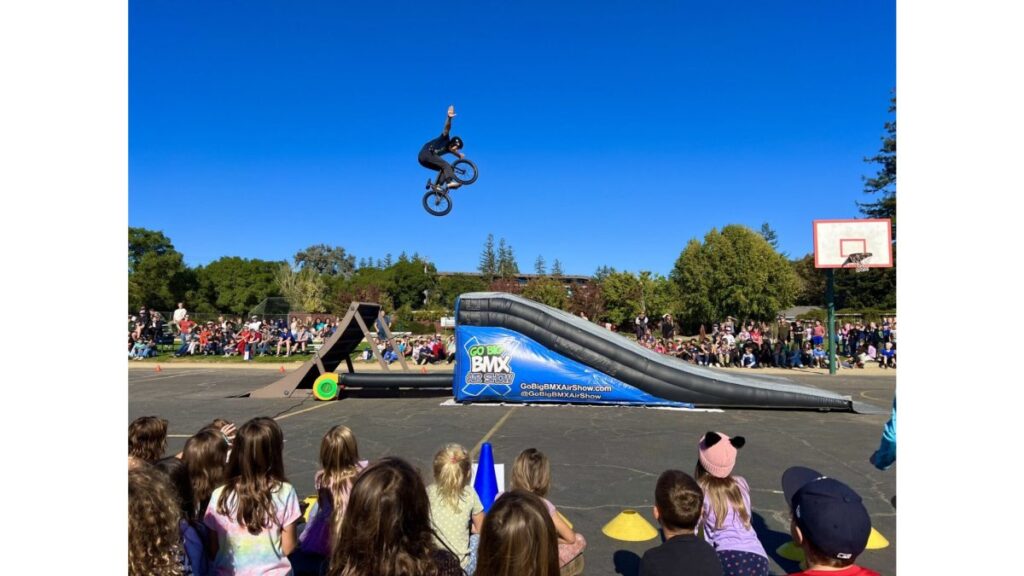
Building respect through school assemblies starts with a simple shift: treat the event as a behavior campaign, not a performance. GO BIG BMX AIR Show has spent 29 years and more than 10,000 shows working in school gyms across the country. A one-off rally fades fast. A planned campaign, with clear language, student voice, and follow-up, changes how students talk to each other.
The design work happens before anyone books a stage.
- Pick one behavior theme: respectful language, inclusion, or upstander action
- Define what respect looks like in hallways, lunchrooms, and online
- Recruit a student planning team to co-create the message
- Choose a format that holds attention: live demo, performance, or panel
- Build classroom follow-up into the plan from day one
Collaborative for Academic, Social, and Emotional Learning framework describes this kind of skill-building as social-emotional learning, which works best when it is taught, practiced, and reinforced.
Ways to Show Respect in School That Students Actually Remember
Respect lessons tend to be more memorable when they are concrete and practiced.
A common mistake is telling students to “be respectful” without showing them what that looks like at 8:15 a.m. in a crowded hallway. Name the behaviors instead:
- Greeting a classmate by name
- Letting someone finish a sentence
- Inviting a student sitting alone to join a table
- Speaking up when a joke crosses a line
- Apologizing without excuses
School assemblies can give these behaviors a stage, with speakers modeling respectful interaction in front of a full gym. For deeper character themes, school assembly ideas for character development can extend the message across a semester.
How to Make School Assemblies Engaging From Start to Finish
Engagement is a design problem, not a personality trait. The best school assemblies build energy in the first 60 seconds, vary the pace every few minutes, and hand the message back to students before the end.
Here is a workable structure for a 40-minute respect assembly:
- Open with action. Start with a high-energy demonstration or performance, then connect it to the theme.
- State the theme in one sentence. Students should be able to repeat it.
- Tell one short, true story about a moment respect mattered.
- Run an interactive segment: role-play, call-and-response, or student volunteers.
- Close with one clear ask. One behavior, one week.
- Hand out a classroom follow-up task before students leave.
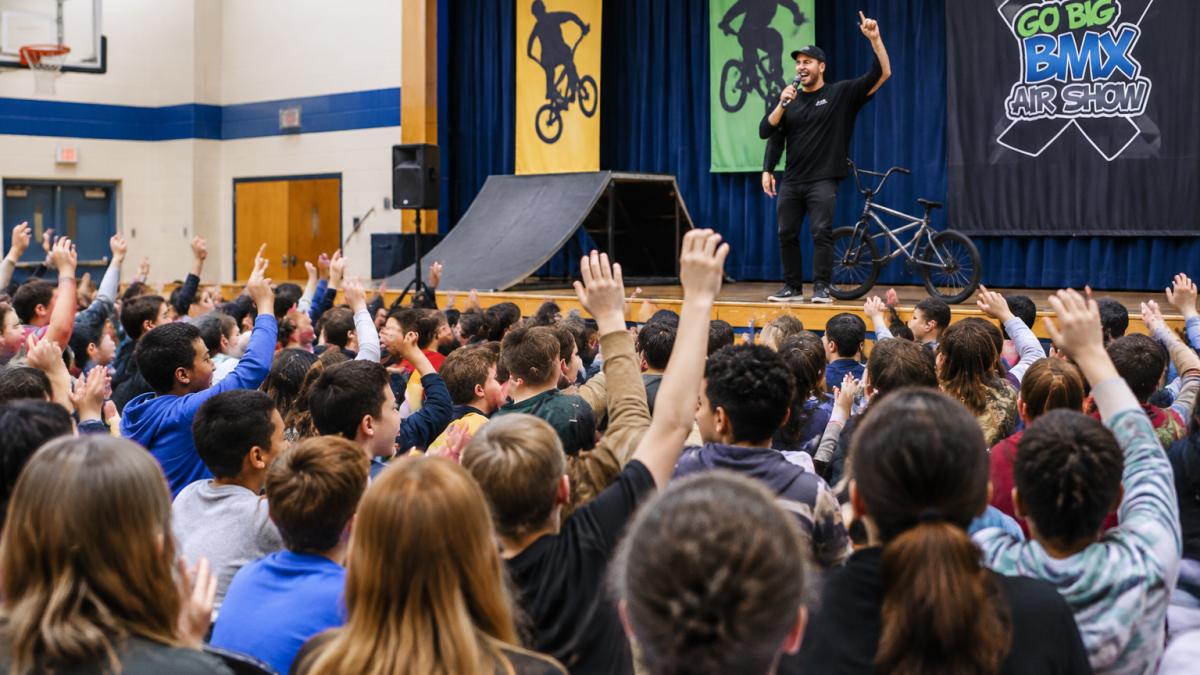
Pacing matters in these events. A mix of movement, story, and student participation helps hold attention. A BMX school assembly is one format that combines high-energy riding demonstrations with spoken segments, giving the respect message a visual anchor. For a fuller planning checklist, see this planning guide for keeping students engaged.
Here is a workable structure for a 40-minute respect assembly.
| Step | What to do |
|---|---|
| 1 | Open with a high-energy demonstration or performance, then connect it to the theme |
| 2 | State the theme in one sentence students can repeat |
| 3 | Tell one short, true story about a moment respect mattered |
| 4 | Run an interactive segment: role-play, call-and-response, or student volunteers |
| 5 | Close with one clear ask: one behavior, one week |
| 6 | Hand out a classroom follow-up task before students leave |
School Assembly Activities for Students Before and After the Event
The assembly is the middle of the lesson, not the whole lesson. Pre- and post-assembly activities turn a fun morning into a lasting message, and they are where most schools leave value on the table.
Before the event (one to two weeks out).
- Have each class define respect in its own words and post the definitions in a common hallway so students see peer language, not adult language.
- Run a five-minute anonymous prompt: “Describe a time you saw someone left out.” Teachers sort responses into themes and hand the themes to the student planning team, who use them to shape the assembly’s scenarios.
- Assign a small group of students to introduce the speaker, thank the performer, and read the school’s one-sentence respect commitment at the close. Student voice in the visible roles signals that the message belongs to students, not just staff.
- Preview the theme in advisory or homeroom with a single question: “What does respect look like in this hallway at 8:15 a.m.?” Collect answers on sticky notes and display them.
After the event (the first two weeks matter most).
- Run a 15-minute classroom discussion within 48 hours on the one behavior the assembly asked for. Waiting a week loses the emotional hook.
- Start a “caught being respectful” recognition wall where students and staff nominate peers by name for specific behaviors, not general praise.
- Ask each student to write one sentence about a moment they chose respect, and have teachers sample a few to read aloud the following week.
- Revisit the school’s one-sentence commitment at the next assembly or morning announcement so the language stays in circulation.
Grade-level adaptations. Elementary classrooms do best with picture-based prompts, a shared read-aloud about inclusion, and a simple nomination slip with a smiley-face scale.
A note on reinforcement. Respect routines work best when they are short, visible, and repeated. A recognition wall that runs for two weeks and then disappears teaches students that the message was seasonal.
For middle school teams, these assembly ideas for middle schoolers include follow-up work that suits that age group, and assembly ideas for elementary students offer formats that pair well with a short respect message.
Writing a Respect Speech for School Assembly by Grade Level
A respect speech should match the audience’s age, attention span, and language. One script does not fit every grade.
Elementary school. Keep it to 10-12 minutes. Use one story, one repeated phrase, and a simple call-and-response. Concrete examples work better than abstract words.
Middle school. Lean into peer dynamics. Talk about group chats, rumors, and the courage to speak up. Role-play scenarios land well here.
High school. Treat students as adults. Discuss leadership, responsibility, and how respect shows up at work and online. Invite student voices into the script.
For elementary audiences, assembly ideas for elementary students offer age-appropriate formats that pair well with a short respect message.
Measuring Whether Your Respect Assembly Changed Student Behavior
You can measure whether a respect assembly changed behavior, and you should. A review window can also show whether respect carries into shared activities beyond the assembly, where Backyard Bounce of Nashville connects the same measurement mindset to planning school field days.
Build a baseline before the assembly. Pull the two weeks of office referrals coded for disrespect, harassment, or bullying that precede the event. Ask teachers to complete a three-question observation form for one week before the assembly: how often students used respectful language, how often a student intervened when a peer was excluded, and how often students invited a lone classmate to join. Keep the form to three items so teachers actually complete it.
Choose indicators that map to the assembly’s ask. If the assembly asked for one behavior, measure that behavior.
Set a review window. Two weeks after the assembly is too soon to see referral changes and too late to catch the immediate energy. A common pattern is to review participation and nominations at two weeks, teacher observations at four weeks, and the belonging survey again at six to eight weeks. Compare each measure to its own baseline rather than to another school’s numbers.
Interpret a pattern, not a single number. No single metric proves an assembly worked.
Report back to students. Share a short summary at the next assembly or in the school newsletter. Students who see their nominations counted and their survey answers reflected are more likely to take the next campaign seriously.
Administrators who want a program built around this message can see the assembly program options and match the format to their grade levels, then align the measurement plan to the format they choose.
Frequently Asked Questions
How effective are school assemblies at teaching respect?
Assemblies work best as a launch point, not a standalone lesson. A high-energy event grabs attention and creates a shared vocabulary around respect, kindness, and inclusion, but retention depends on what happens next. Schools that pair an assembly with classroom discussions, role-playing scenarios, and consistent reinforcement see the message hold up over time. Treat the assembly as the spark and the follow-up activities as the fuel that keeps positive behavior going through the school year.
What activities can help students practice respect during an assembly?
Interactive moments keep students from tuning out. Try quick peer-recognition prompts where students name a classmate who showed kindness, role-playing scenarios that ask volunteers to act out respectful responses to conflict, or group work that has each row brainstorm one way to show respect in school. Movement-based activities like a unity clap or a school spirit chant also reinforce belonging. The goal is active participation, not passive watching, so build in at least two interactive segments per assembly.
How should schools adapt a respect assembly for different grade levels?
Elementary school students respond to simple language, storytelling, and clear examples of kindness and inclusion. Middle school students need peer-focused scenarios and leadership opportunities because peer influence drives their choices. High school audiences want authenticity and real consequences, so connect respect to responsibility, courage, and life after graduation. Age-appropriate programming means adjusting the script, the examples, and the interactive activities for each group rather than running one version for everyone.
How can schools reinforce an assembly’s message after the event?
Follow-up activities decide whether an assembly sticks. Within a week, run a classroom discussion on the assembly’s main themes, assign a short reflection or writing prompt, and start a recognition wall where students and staff note acts of respect and kindness. Monthly themes, student leadership groups, and brief check-ins at advisory periods keep the language alive. Planning follow-up before the assembly date helps keep the message active beyond a single day.
