
Last Updated: November 15, 2026
Quick Summary
Effective motivational school assemblies for high school students capture attention through live performance first, then deliver a message students retain. GO BIG BMX AIR Show has spent 29 years and more than 10,000 shows delivering assemblies to schools nationwide. The message must be threaded between performance segments, not tacked on at the end.
- Name your campus priority first, then choose the assembly theme that addresses it.
- Pair mental health assemblies with counselor visibility and a pre-briefed support plan.
- Anti-bullying programs work when they teach specific bystander scripts, not slogans.
- End leadership assemblies with a visible on-ramp like a council application or sign-up.
- Attach a two-week follow-up plan with advisory prompts and one concrete student challenge.
Table of Contents
- What Motivational School Assemblies Actually Deliver for Grades 9-12
- Motivational Assembly Topics for High School That Match Your Campus Goals
- Mental Health Awareness and Emotional Well-Being
- Resilience, Grief, and Overcoming Setbacks
- Anti-Bullying, Kindness, and Bystander Responsibility
- Student Leadership and Responsibility
- Belonging and Inclusion
- Academic Motivation and Personal Growth
- Arts, Music, and Performance-Based Assemblies
- How to Choose Between Themes
- Motivational Activities for High School Students That Keep Engagement High
- Frequently Asked Questions
What Motivational School Assemblies Actually Deliver for Grades 9-12
The plain answer: well-built motivational school assemblies for high school students deliver attention first and retention second. They interrupt the normal school day with something students cannot scroll past, then hand teachers a shared vocabulary to keep using afterward. GO BIG BMX AIR Show has spent 29 years and more than 10,000 shows delivering assemblies to schools nationwide.
The distinction matters for principals weighing a booking. A pep rally produces a mood. A structured assembly produces a mood plus a message, and only the second one survives until Monday.
Three outcomes separate the two:
- Captured attention. Live performance resets the room’s energy in a way a lecture cannot.
- A memorable frame. Students remember the stunt and attach the message to it.
- Teacher follow-through. The message gets referenced in advisory periods and classrooms.
Motivational Assembly Topics for High School That Match Your Campus Goals
Topic selection is a common starting point for planning conversations. The stronger sequence is to name the campus priority first, then find the program that addresses it.
The table below maps common high school assembly themes to the campus need each one serves, a typical format, and a suggested follow-up. Principals and activities directors can use it as a one-page decision aid during a planning meeting.
| Campus priority | Assembly theme | Format that tends to work | Follow-up that sustains it |
|---|---|---|---|
| Climate and belonging | Kindness, inclusion, anti-bullying | Performance plus student testimony | Advisory circle prompts; bystander-reporting refresher |
| Emotional well-being | Mental health awareness and help-seeking | Athlete narrative plus counselor close | Counselor office hours posted; help-seeking script in advisory |
| Academic motivation | Goal-setting and personal growth | Keynote with student Q&A | One-goal card students keep; teacher check-ins at progress reports |
| Leadership pipeline | Student leadership and responsibility | Workshop-style breakout plus assembly | Student-led club kickoff; leadership application window |
| Rebuilding after a hard season | Resilience, grief, and overcoming setbacks | Quiet-tone keynote with support staff present | Small-group sessions; grief-support referral path |
| School culture reset | Community and shared standards | High-energy performance with message threading | Common vocabulary adopted in advisory and classroom norms |
Mental Health Awareness and Emotional Well-Being
Assemblies addressing emotional well-being work best when they normalize help-seeking rather than diagnose anyone. Students in grades 9-12 are old enough to notice a lecture disguised as a performance, and they tune out accordingly.
What lands: athletes describing pressure, setback, and recovery in concrete terms. What misses: clinical language and statistics read from slides.
Pair any mental health assembly with counselor visibility. Invite the counseling team to speak for sixty seconds at the close, and students leave knowing a name and a room number. Counselors can be stationed at the exits afterward so a student who wants to talk does not have to cross the gym to find one.
Watch out: a speaker who shares a personal mental health story without a pre-briefed support plan can leave disclosures with no one ready to receive them. Confirm in writing that counseling staff will be present for the full session and that a quiet room is available.
Resilience, Grief, and Overcoming Setbacks
Resilience programming carries a specific risk that principals should plan around. A speaker describing personal loss can surface grief in the audience, and the room may contain students who have recently experienced one.
Brief the counseling staff in advance and agree on a quiet space students can step into. This is not a reason to avoid the topic. It is a reason to prepare for it.
The message itself should stay forward-facing: setbacks are survivable, support exists, and asking for it is a strength. Role-model athletes who describe their own failures carry more weight here than polished success stories. When athletes show that asking for support is part of moving forward, their example can also help Empower Girls to see their own voices and choices as sources of strength.
Anti-Bullying, Kindness, and Bystander Responsibility
Anti-bullying assemblies fail when they stop at “be kind.” High school audiences have heard the slogan since elementary school. What moves the needle is specificity about bystander behavior: what to say in the moment, who to tell, and what the school will actually do with the report.
A strong format pairs a performance hook with two or three concrete bystander scripts students can rehearse in advisory the following week. Close by restating the reporting channel, the actual name, form, or room, so students leave with a next step rather than a feeling.
Student Leadership and Responsibility
Leadership-themed assemblies work best when they double as a recruitment event. A keynote on responsibility lands harder when it ends with a visible on-ramp: a student council application, a peer-mentoring sign-up, or a service-project kickoff. Otherwise the inspiration evaporates by the next bell.
Belonging and Inclusion
Belonging programming should reflect the actual student body. Before booking, ask whether the speaker lineup, stories, and examples reflect the range of students in the room, including students with disabilities, multilingual learners, and students from different cultural backgrounds. An assembly about inclusion that visibly excludes part of the audience undercuts its own message.
Academic Motivation and Personal Growth
Academic motivation assemblies tend to work when they are concrete. A speaker who describes a specific study habit, a specific setback, and a specific recovery gives students something to copy. Vague encouragement to “do your best” does not survive contact with a Tuesday night homework load.
Arts, Music, and Performance-Based Assemblies
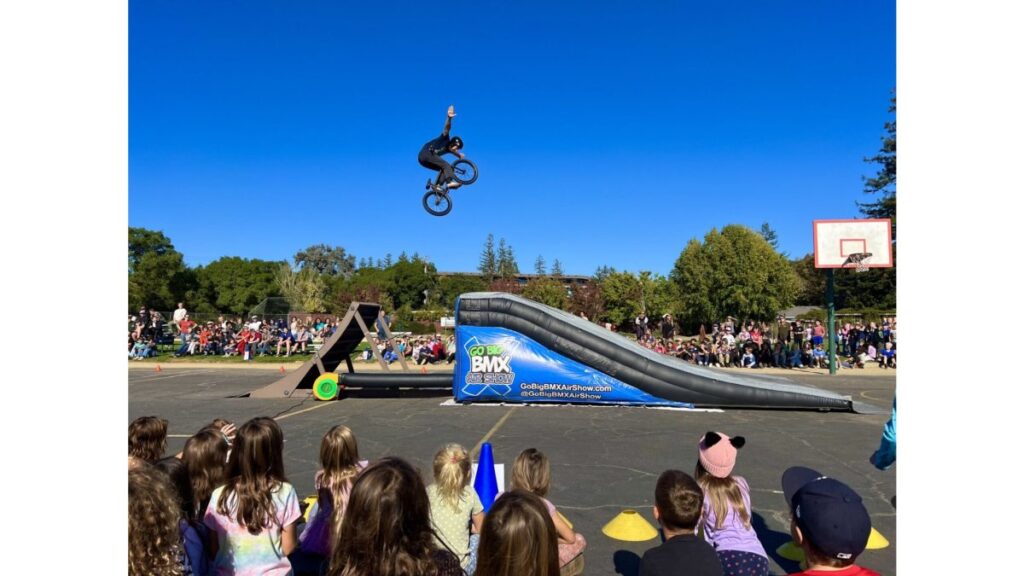
Performance-based programs, BMX and stunt shows, drum lines, spoken word, dance, earn attention through visible skill. The message has to be threaded between segments rather than tacked on at the end, or students remember the trick and forget the point. A BMX School Assembly is one example of this format, using big-air stunts as the hook while the message is delivered between segments.
How to Choose Between Themes
When two themes compete for the same assembly slot, three questions usually settle it:
- What does the data say? Review referral trends, climate survey results, and counselor caseloads from the current year before choosing a theme.
- What can staff sustain? A theme only works if advisory teachers can carry it for at least two weeks. Pick the theme your staff has the capacity to follow up on.
- What does the audience need right now? A campus recovering from a loss needs a different program than a campus coming off a championship season.
National Association of Secondary School Principals resources on school climate
Motivational Activities for High School Students That Keep Engagement High
Engagement is the objection every coordinator raises, usually in the same words: the kids were on their phones within twenty minutes. That is a format problem, not a student problem.
Formats that hold a high school audience share three traits: visible skill, real stakes, and audience participation. For a deeper planning guide, see Keep Students Engaged During Assemblies: A Planning Guide.
- Live demonstration. A professional athlete performing big air stunts in the gym creates attention through live, visible skill.
- Narrative threading. The message is delivered between performance segments, not after them.
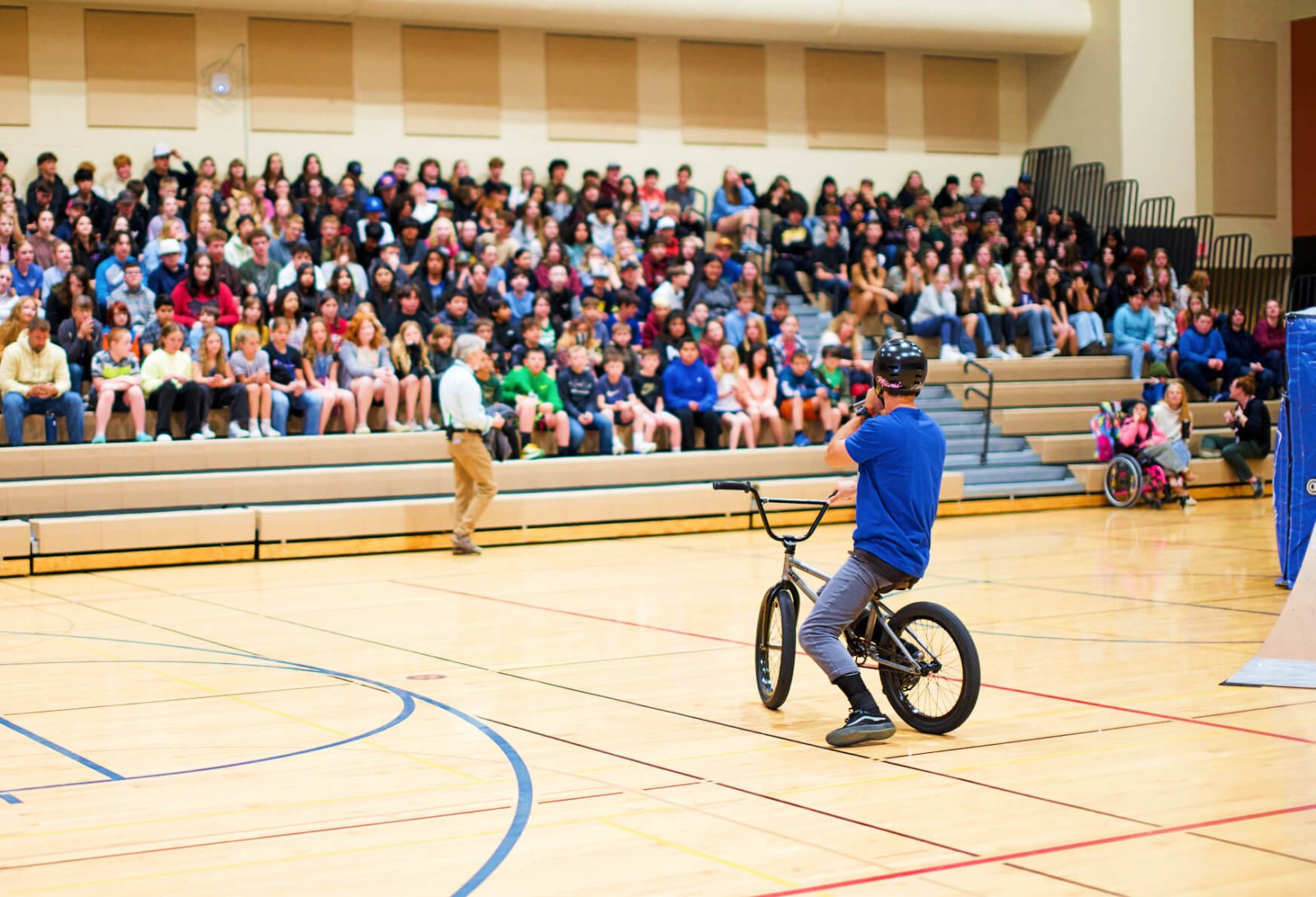
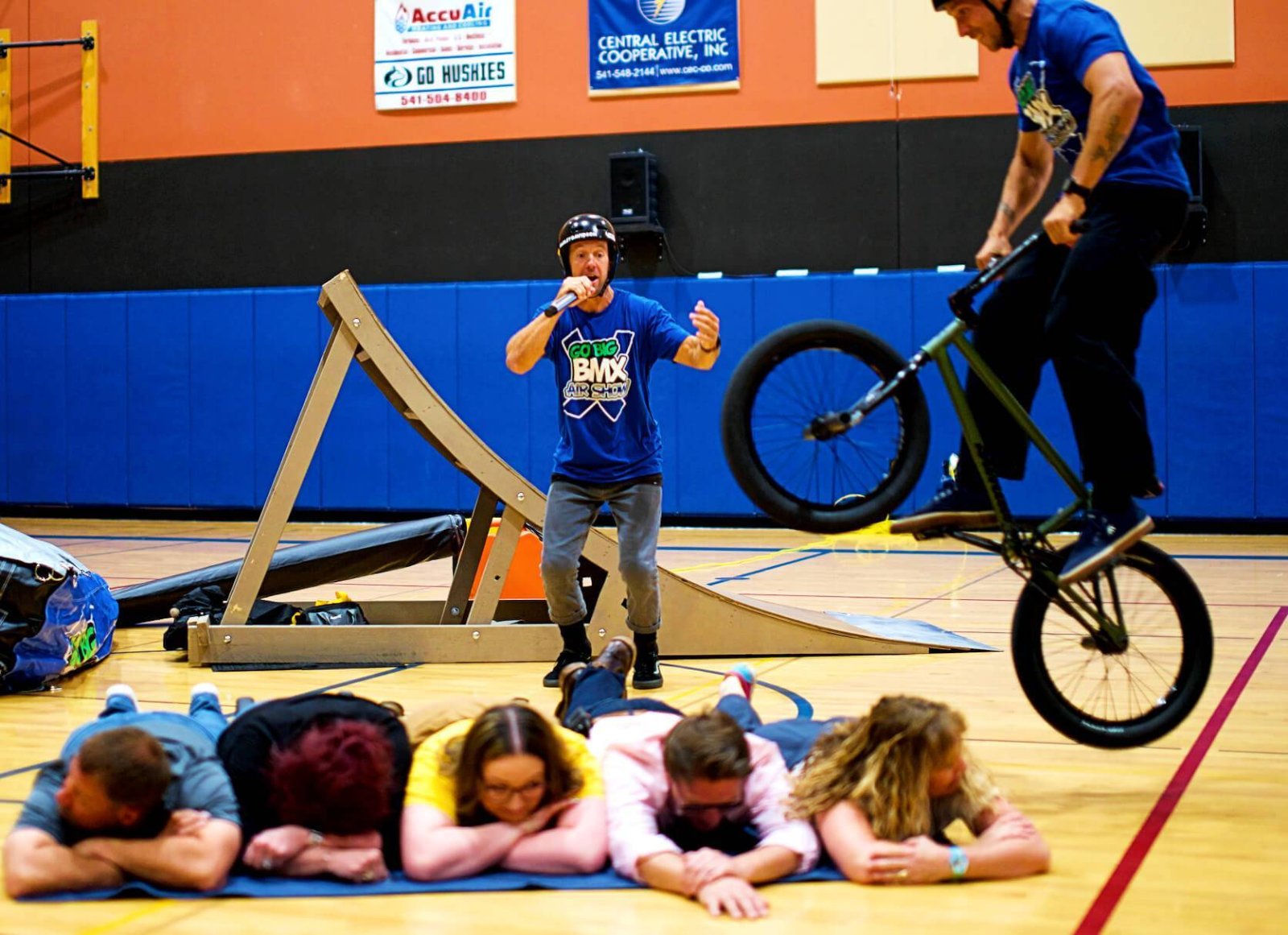
- Audience involvement. Volunteers from the student body, pre-selected with staff, step into the performance area for controlled participation moments.
The Engagement Mechanics Behind Those Three Traits
Visible skill can reset the room’s attention. A student who has just watched a rider clear a height they can see against the gym wall may be primed to listen for the next moments. The speaker’s job is to use that window.
Audience participation is typically most effective when it is structured. Pre-selected participants briefed in advance can help the moment run smoothly.
Designing for Students Who Find Large Gatherings Difficult
A gym-sized assembly is not accessible to every student, and a program that only works for the crowd leaves some of the audience behind. Practical accommodations include:
- Seating and sightlines. Reserve accessible seating with clear sightlines and confirm the route from the entrance is unobstructed.
- Sound and sensory load. Provide a quieter overflow viewing area for students who need lower volume or smaller crowds, and brief staff on how students can request it without drawing attention.
- Language access. Share key messages and follow-up prompts in the languages represented in the student body, and confirm any spoken content is captioned or summarized in printed form.
- Alternatives to attendance. Offer a classroom-based alternative activity for students whose IEP, 504 plan, or sensory needs make a large assembly difficult, so participation is not a binary.
Watch out: an assembly that assumes every student can sit on a gym floor for an hour will exclude students with mobility or sensory needs, and the exclusion is visible to the whole room. Confirm accessibility logistics with facilities and special education staff before the booking is finalized. If the program involves stunts, review what safety standards apply to school gym stunt shows.
Safeguarding and Sensitive-Topic Protocols
Any assembly that touches mental health, grief, bullying, or trauma needs a protocol agreed on before the event, not after. The essentials:
- Pre-brief support staff. Counselors, social workers, and administrators should know the content in advance and be present for the full session.
- Agree on a disclosure path. Decide in advance how a student who discloses something during or after the assembly reaches a trusted adult, and make sure every staff member in the room knows the path.
- Prepare post-assembly resources. Have printed or digital resource cards ready, counselor names, office locations, crisis line information, and distribute them at the exits.
- Debrief with staff. Schedule a short staff debrief within forty-eight hours so teachers can flag concerns and share what students are saying.
Measuring Whether the Assembly Worked
Impact is best assessed with evidence collected by the school. Schools that want evidence should decide on two or three indicators before the event and collect them consistently:
- Participation. Count volunteers, advisory discussion participation, and follow-up activity sign-ups.
- Follow-up engagement. Track how many students attend counselor office hours, submit leadership applications, or join the club tied to the assembly theme in the two weeks after.
- Belonging and climate signals. Compare a short climate survey item before and after the assembly, or review referral trends for the weeks that follow.
- Help-seeking. Monitor whether students are using the reporting or counseling channels the assembly promoted.
None of these indicators proves causation on its own. Together they give principals a defensible picture of whether the assembly moved anything, which is more than a satisfaction survey can offer.
Follow-Up Activities That Sustain Behavior Change
An assembly is a starting gun, not a finish line. The programs that change behavior are the ones with a two-week follow-up plan attached:
- Advisory discussion prompts. Provide three questions teachers can use in the first advisory period after the assembly, tied to the theme.
- A student challenge. Give students one concrete action to take within a week, a conversation, a sign-up, a habit, and have advisory teachers check in on it.
- Staff follow-up plan. Agree on which staff member owns the follow-up, when it happens, and how it gets reported back to administration.
- A visible reminder. A poster, a morning announcement, or a short video clip from the assembly keeps the message in front of students after the gym empties.
Centers for Disease Control and Prevention guidance on school connectedness and student mental health
Frequently Asked Questions
What are good motivational assembly topics for high school students?
Strong topics for grades 9-12 include anti-bullying and kindness, mental health awareness and help-seeking, resilience and overcoming setbacks, student leadership and responsibility, and academic motivation. The topic should match a goal your campus already has, such as a kindness campaign or a stress-management push before exams. Assemblies that pair a clear message with audience involvement tend to hold attention better than lecture-style presentations.
How long should a high school assembly be?
Most high school assemblies run 40 to 60 minutes, including setup and dismissal. A 45-minute block gives enough time for a keynote message, student participation, and a call to action without cutting into class periods. If your schedule uses shorter periods, a 30 to 40 minute program can work when the message is focused. Confirm runtime with the provider in advance so you can build a bell schedule around it.
How do schools make an assembly engaging for high school students?
Engagement comes from audience involvement and relevance. Interactive formats, student voice, and live demonstrations hold attention better than a single speaker at a podium. Pair the program with follow-up activities such as a school-wide challenge, advisory discussions, or student-led kindness campaigns. Feedback forms after the event show which parts landed and help you plan the next one.
What should schools look for when choosing a motivational assembly speaker or program?
Ask for proof of experience, references from similar schools, insurance and safety documentation, and a clear outline of the message. Confirm how the program connects its performance or format to the lesson so it does not feel forced. Check accessibility and safeguarding practices, and ask what follow-up materials are provided. A provider with a long track record and repeat bookings is a useful signal.
